How to calm down fast: a 60-second plan
Not medical advice.
Published by Aama · Updated · 4 min read
You do not need a quiet room, an app or ten spare minutes. This is a plan you can run in one minute, standing in a corridor, sitting at a desk or waiting for a bus.
Seconds 0 to 20: one long breath
Breathe in through your nose, then add a short second sniff to top up. Let the air out slowly through your mouth, longer than you breathed in. Do it two or three times. This is the physiological sigh. If you prefer something simpler, breathe in for four and out for six.
Keep the breaths small and soft. Huge breaths can make you feel light-headed.
Seconds 20 to 45: look around
Let your eyes move slowly around the room. Name, silently, five things you can see. Choose plain details: the blue mug, the window, the edge of the table, a crack in the wall, your own hands.
If you can, press your feet into the floor and notice the pressure. This brings your attention out of your head and into the room.
Seconds 45 to 60: one small next step
Ask yourself one question: what is the next small thing? Not the whole day, not the whole problem. Drink some water. Reply to one message. Step outside for a minute. Write one line in a note.
Saying the step out loud, even quietly, makes it more real.
Why these three steps
Each part of the plan does a different job.
- The long breath gives your body a clear signal to slow down. A longer out-breath is widely used for relaxation, and many people find it eases tension quickly.
- Looking around moves your attention out of your thoughts and into the room. When stress runs ahead into "what if", the present moment is usually calmer than the story in your head.
- One small step turns a vague, heavy feeling into something you can act on. Stress shrinks a little when it has a next move.
None of this is magic, and you do not need to believe in it for it to help. It is just a short, repeatable routine.
Three versions for different places
In public. Keep the breath quiet and the eyes soft. Look at the far side of the room, name three things you can see, and breathe out slowly. Nobody will notice.
At your desk. Push your chair back a little, rest both feet on the floor and drop your shoulders. Take your breaths, then look away from the screen for ten seconds. Finish by typing a single line of what you will do next.
In bed at night. Skip the looking-around part and use sound and touch: the weight of the blanket, the sounds in the house. If your mind is busy, try a slow word game such as cognitive shuffling.
Practice it once a day
A routine you have tried when calm is easier to use when you are not. Pick a regular moment, such as after brushing your teeth or when the kettle is on, and run the plan once. After a week or so it starts to feel automatic.
If a minute is not enough
Some days, one round will not do it. That is normal. You can:
- Repeat the plan once more.
- Try a longer exercise from breathing exercises for anxiety.
- Pick a different sense, such as holding something cold or tasting a strong mint, from grounding techniques for anxiety.
- Take five minutes to reset properly.
What this plan is not
It is an everyday tool for ordinary stress, not a treatment. If you feel chest pain, struggle to breathe, feel faint, or have thoughts of harming yourself, stop and get urgent help. Call your local emergency number, or visit our helplines page to find a person to talk to.
If stress or anxiety is frequent or getting in the way of your life, a doctor or counselor can help, and asking is a strong thing to do.
You can also use our free breathing exercise timer if you would like the pace shown on screen.
Common questions
What is the fastest way to calm down?
For most people the quickest options are a long, slow out-breath such as the physiological sigh, and a quick sensory check such as naming five things you can see. Combining both takes about a minute.
Why do I feel worse when I try to calm down?
Trying hard to relax can add pressure. Keep it small and gentle: one slow breath, then look around the room. If counting makes you tense, skip the numbers.
When is feeling stressed more than stress?
If you have chest pain, trouble breathing, fainting, or thoughts of harming yourself, get urgent help instead of using a calming technique. Your local emergency number or our helplines page can point you to people who can help.
Try this in Aama
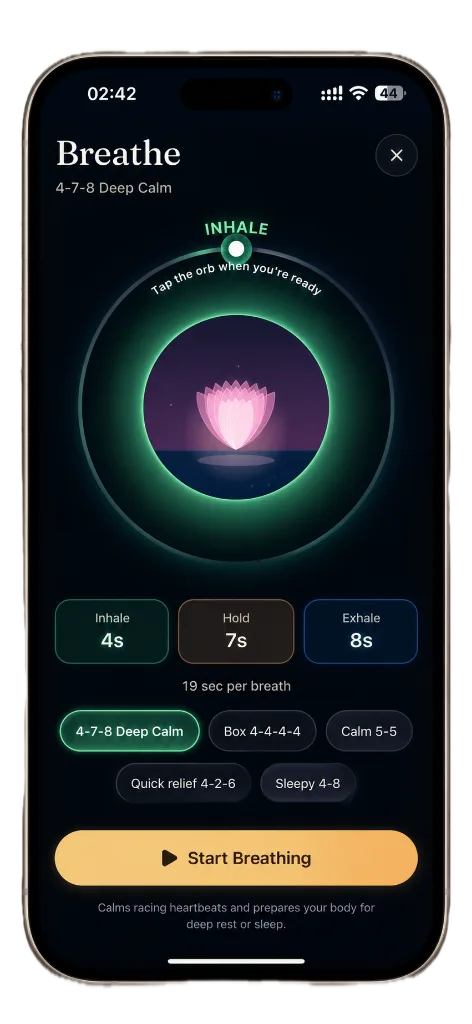
Breathing exercises, sleep sounds and a mood journal, in one quiet app for your phone. No ads inside.
Feeling unsafe? Get help now
Related guides
The physiological sigh: a quick breathing trick for an anxiety spike
How to do the physiological sigh, a two-breath pattern many people use to settle quickly when anxiety spikes, with a look at what research says and its limits.
Breathing exercises for anxiety: 5 simple techniques you can do anywhere
Five calm breathing exercises for anxiety, how each one works, when to use it, and how to choose. Includes the physiological sigh, box breathing, 4-7-8, and more.
Grounding techniques for anxiety: 7 ways to come back to the present
Seven simple grounding techniques for anxiety and overwhelm, from 5-4-3-2-1 to cold water and strong tastes, with guidance on how to choose and when to seek more help.
A 5-minute reset for a busy, noisy day
A short reset you can do at your desk or on the sofa: breathe, loosen, look around, and choose one small next step.