Cognitive shuffling: a simple mental trick for falling asleep
Not medical advice.
Published by Aama · Updated · 6 min read
Lights off. Phone away. Your mind is still going. This page is a walkthrough you can read once, now, and then run from memory in bed. It takes about ten minutes to try, and nothing in it needs effort.
The idea in two sentences
When you drift off naturally, your thoughts stop making sense: a bicycle, a kitchen, a blue door, with no story joining them. Cognitive shuffling, an idea from cognitive scientist Luc Beaudoin, copies that scattered pattern on purpose, so your mind has nothing to build a worry from.
Stage 1: settle (one minute)
Lie on your side or back, whichever is easiest. Let your jaw drop a little. Breathe in through your nose, then let the out-breath be slightly longer than the in-breath. Do this five times. That is all the preparation there is.
Stage 2: choose a seed word
Pick a plain, neutral word. Good ones: lamp, garden, blanket, window, candle. Avoid anything tied to work, money, people or plans.
Say it to yourself once. We will use "lamp" below.
Stage 3: build the chain
Take the first letter. Think of a word that starts with it, and see it for a second or two. Then let it go and find another.
Here is how a chain might sound in your head:
L: lemon... ladder... lighthouse... lace... lagoon... A: apple... anchor... attic... acorn... M: mailbox... mountain... marble... mitten... P: pillow... pear... paddle... puddle...
Notes while you do it:
- Spend three to five seconds on each picture. Slow is the whole point.
- Do not link the words into a story. If the lemon starts turning into a lemon tree in a garden, drop it and move to the next word.
- If you run out of words for a letter, simply move on. No one is keeping score.
Stage 4: let it fade
When you finish your seed word, pick a new one, or simply rest. If you lose your place, forget the word, or notice you have gone fuzzy, that is the technique working. Do not try to find your way back.
A picture-only variation
If spelling feels like too much work when you are tired, skip the letters. Picture one object at a time (an apple, a mailbox, a red umbrella, a sock), each for a few seconds, none connected to the next.
What we actually know
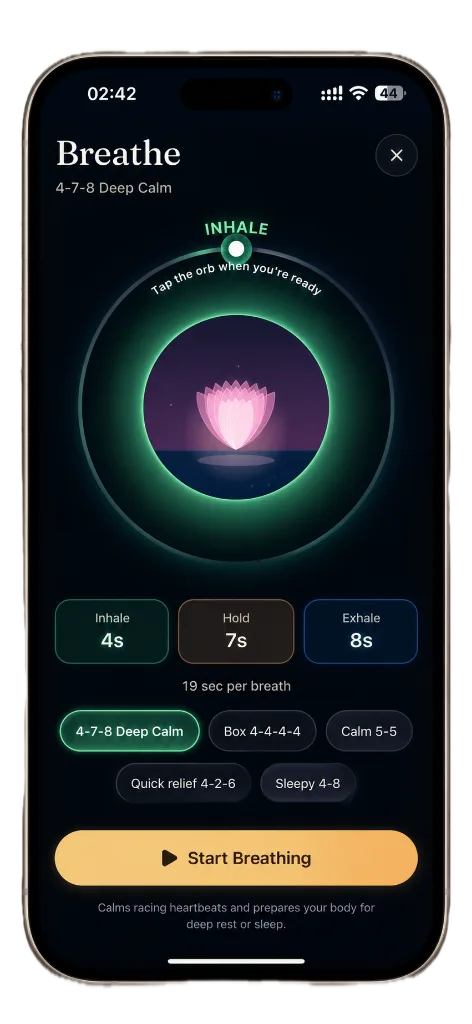
Honestly, not much. Many people say cognitive shuffling helps them, and it is low risk, but there is little strong research behind it so far. Treat it as an experiment: try it on four or five nights, and keep it if it helps. If it does not suit you, that is fine too. Breathing exercises for sleep are another gentle option.
If you are still awake after twenty minutes
Get up, sit somewhere dim and do something quiet until you feel sleepy. Lying there frustrated teaches your brain to link bed with effort. And if your night thoughts are about a particular worry, write it down earlier in the evening: our guide to stopping overthinking at night shows how. A longer run of bad nights is worth mentioning to a doctor.
Common questions
How long does cognitive shuffling take to work?
There is no set time. Some people drift off within a few minutes, others need a few nights of practice, and for some it simply does not suit them. Give it a fair try over several nights before deciding.
What if I run out of words?
Just move on to the next letter, or pick a new seed word. Running dry is normal, and getting a little bored is actually the point.
Is cognitive shuffling proven to treat insomnia?
No. It is a low-risk technique that some people find helpful, and the research on it is limited. If poor sleep goes on for weeks, speak to a doctor or sleep professional.
Try this in Aama
Breathing exercises, sleep sounds and a mood journal, in one quiet app for your phone. No ads inside.
Feeling unsafe? Get help now
Related guides
How to calm racing thoughts at night
Why your brain loops at 1 AM, the cognitive shuffle trick to induce sleep, and gentle ways to park midnight worries.
How to stop overthinking at night
Why your mind gets louder at night, and seven practical steps to quiet overthinking: a worry list, slow breathing, and what to do if you are still awake.
Breathing exercises for sleep: gentle techniques for bedtime
Easy breathing exercises to help you wind down for sleep, including 4-7-8, a longer out-breath and calm 5-5 breathing, plus how to build them into a bedtime routine.
Wind down before bed: a 20-minute routine
A short, realistic evening routine to help your mind unwind before sleep, with sound tips and what to do if you can't sleep.