Why can't I sleep when I'm tired?
Not medical advice.
Published by Aama · Updated · 7 min read
You have been dragging yourself through the day, you finally get into bed, and your eyes will not close. It is one of the most frustrating feelings there is, and it has a few common explanations.
Tired is not the same as sleepy
Tired means you are drained: low energy, heavy limbs, foggy thinking. Sleepy means your body is actually ready to fall asleep. You can be very tired and not sleepy at all, especially when something is keeping your body switched on.
The usual reasons
A wired nervous system
Stress, worry or a stressful day can leave your body in an alert state. Your heart rate stays up, your muscles stay tight and your mind keeps scanning. You can be worn out and still feel on edge.
Caffeine that is still around
Caffeine can stay in your system for many hours. A coffee, a strong tea or an energy drink in the afternoon can still affect sleep that night.
Light and screens
Bright light in the evening, especially from screens held close to your face, can tell your body clock that it is still daytime. Activity on screens can also keep your mind engaged.
An uneven schedule
If your bedtime and wake time change a lot, your body does not know when to feel sleepy. Weekend lie-ins and late nights can shift your body clock.
Naps and late rest
A long or late nap can take the edge off your sleep drive at night. Lying on the sofa for a few hours in the evening can do the same.
A busy mind
Replaying the day, planning tomorrow or worrying can keep your brain active. Trying hard to fall asleep tends to make it worse.
Alcohol, heavy food and heat
Alcohol can make you drowsy but often makes sleep lighter and more broken. A big late meal or a hot, stuffy room can also get in the way.
A quick self-check: tired or sleepy?
| Sign | Tired | Sleepy |
|---|---|---|
| Body | Heavy, drained | Heavy eyelids, yawning |
| Mind | Foggy but busy | Drifting, thoughts loosening |
| In a quiet room | Restless, alert | Nodding off |
| Likely helped by | Rest, food, a calmer evening | Going to bed |
If you are mostly in the "tired" column at bedtime, going to bed early rarely helps. It is usually better to spend the last hour on something calming until sleepiness arrives.
Common myths
- "I must go to bed early to catch up." Going to bed far earlier than usual can mean more time awake in bed, which can add frustration.
- "A nightcap helps me sleep." Alcohol can make you drowsy at first but often leads to lighter, more broken sleep later in the night.
- "If I lie still I'm still resting." Resting quietly is fine, but lying there tense and watching the clock tends to make you more alert.
A simple plan for tonight
- Stop caffeine by early afternoon from today.
- In the early evening, write down tomorrow's three biggest worries or tasks.
- Dim the lights and put the phone away for the last 30 minutes.
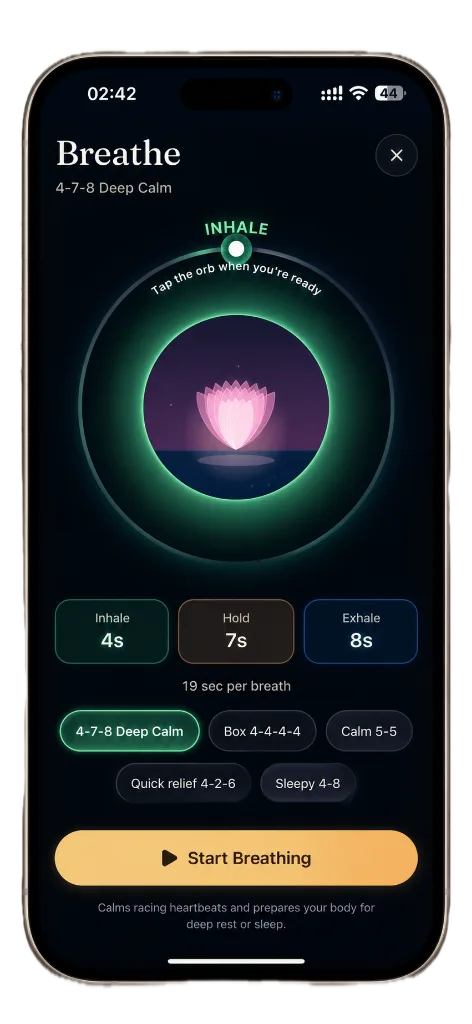
- Try five minutes of slow breathing with a longer out-breath.
- If you are awake and tense after about 20 minutes, get up and rest somewhere dim, then return when sleepy.
What often helps
- Keep a regular schedule, with a similar wake time every day, even after a bad night.
- Move caffeine earlier. Many people do better with none after early afternoon.
- Dim the lights and put screens away for the last half hour. Our 20-minute wind-down shows one way.
- Slow your breathing with a longer out-breath. See breathing exercises for sleep.
- Write worries down earlier, as described in how to stop overthinking at night.
- If you are still awake after about twenty minutes, get up, sit somewhere dim, do something quiet and return when you feel sleepy.
When to talk to a doctor
Please speak to a doctor or sleep professional if:
- You have trouble sleeping most nights for several weeks.
- You are very sleepy in the day, or you snore loudly or stop breathing in your sleep.
- Your mood is low, or you feel anxious much of the time.
- You rely on alcohol or sleeping tablets to get through the night.
These problems are common, and there are well-studied treatments, including talking therapy designed for sleep. If you feel unsafe or hopeless, use our helplines page.
Common questions
Why am I exhausted but wide awake at night?
Tiredness is a need for rest, while sleepiness is your body being ready to fall asleep. Stress hormones, caffeine, late light, an irregular schedule or worry can keep your body alert even when you feel drained.
Does napping make it harder to sleep at night?
Long or late naps can reduce your drive to sleep at night for some people. A short nap early in the afternoon is less likely to cause trouble.
How long is too long to have trouble sleeping?
Occasional bad nights are normal. If trouble sleeping happens most nights for a few weeks, or affects your days, speak to a doctor or sleep professional.
Try this in Aama
Breathing exercises, sleep sounds and a mood journal, in one quiet app for your phone. No ads inside.
Feeling unsafe? Get help now
Related guides
How to stop overthinking at night
Why your mind gets louder at night, and seven practical steps to quiet overthinking: a worry list, slow breathing, and what to do if you are still awake.
Wind down before bed: a 20-minute routine
A short, realistic evening routine to help your mind unwind before sleep, with sound tips and what to do if you can't sleep.
Breathing exercises for sleep: gentle techniques for bedtime
Easy breathing exercises to help you wind down for sleep, including 4-7-8, a longer out-breath and calm 5-5 breathing, plus how to build them into a bedtime routine.
How to calm racing thoughts at night
Why your brain loops at 1 AM, the cognitive shuffle trick to induce sleep, and gentle ways to park midnight worries.