How to stop overthinking at night
Not medical advice.
Published by Aama · Updated · 7 min read
Advice about night-time overthinking often makes things worse, because it is built on a few ideas that sound sensible but do not hold up. Here are the common ones, and what tends to help instead.
Myth: "I have to switch my thoughts off"
You cannot command your mind to go quiet, and the effort of trying keeps you awake. Thoughts at night are not a fault. They are what an under-occupied mind does.
What helps instead: give your mind a gentle job. Slow your out-breath, or try a light, boring exercise such as cognitive shuffling, where you think of a slow chain of unrelated words.
Myth: "If I think it through, I'll solve it"
At 2 AM you are tired, which makes problems look bigger and solutions look further away. Many people notice the same problem feels more manageable in daylight, with the same facts.
What helps instead: park it. Keep a notepad by the bed and write down a few words: "call the bank", "reply to Sam". Then tell yourself, "It is written down. I will look at it in the morning."
Myth: "Worrying in bed is at least a way to be prepared"
Rehearsing worries tends to raise your alertness, not your readiness. The useful version of worrying is planning, and planning works better earlier in the day.
What helps instead: take ten minutes in the early evening and write a worry list. Beside each item, add one tiny next step. At night, when a worry returns, you can say "that one has a plan".
Myth: "Staying in bed is always the same as resting"
Lying awake and frustrated for a long time can teach your brain to link your bed with worry. It is a bit like sitting in a restaurant that never serves you.
What helps instead: if you have been awake and tense for about twenty minutes, get up. Sit somewhere dim, read a few paper pages or listen to soft sound (our free sleep sounds mixer has a fade-out timer), and go back when you feel sleepy.
Myth: "A nightcap or late coffee won't matter"
Caffeine can linger for many hours, and alcohol may help you drop off but often makes sleep lighter and more broken. If nights are the problem, these are among the easiest things to adjust.
What helps instead: stop caffeine by early afternoon, keep alcohol away from bedtime, and dim the lights and put screens away for the last half hour. A loose, repeatable routine helps. Our 20-minute wind-down is one example.
Myth: "Something must be wrong with me"
A noisy mind at night is very common. It is not a sign of weakness, and it usually eases when stress eases.
That said, trouble that lasts is worth taking seriously. If this happens most nights for several weeks, if you are dreading bedtime, or if you feel low or constantly on edge, tell your doctor. Talking therapies designed for sleep have good evidence behind them.
If you do one thing tonight
- Write three worries and one small step for each, before you get into bed.
- Put a notepad within reach.
- Take five slow breaths with a long exhale, then try one of the quiet exercises above.
If you ever feel unsafe or hopeless, please go to our helplines page rather than waiting for morning.
Common questions
Why do I overthink more at night?
During the day, work, people and noise keep your attention busy. At night, with fewer distractions and a body that is tired, your mind turns to unfinished things and worries. Tiredness also makes problems feel bigger than they are.
Should I stay in bed if I cannot stop thinking?
If you have been awake and frustrated for about twenty minutes, it usually helps to get up, sit somewhere dim, do something quiet, and return to bed when you feel sleepy. This stops your brain linking your bed with worry.
When should I see a doctor about night-time worry?
If it happens most nights for several weeks, affects your days, or comes with low mood, constant fear or panic, please speak to a doctor or mental health professional. Help is available and these problems are common.
Try this in Aama
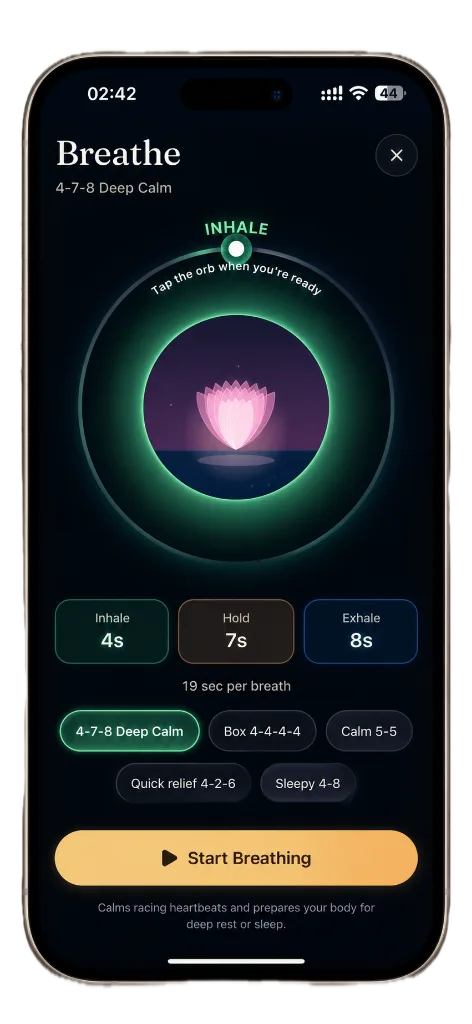
Breathing exercises, sleep sounds and a mood journal, in one quiet app for your phone. No ads inside.
Feeling unsafe? Get help now
Related guides
Cognitive shuffling: a simple mental trick for falling asleep
What cognitive shuffling is, how to do it step by step, two easy versions, and an honest look at what we know about whether it helps you fall asleep.
How to calm racing thoughts at night
Why your brain loops at 1 AM, the cognitive shuffle trick to induce sleep, and gentle ways to park midnight worries.
Wind down before bed: a 20-minute routine
A short, realistic evening routine to help your mind unwind before sleep, with sound tips and what to do if you can't sleep.
Breathing exercises for sleep: gentle techniques for bedtime
Easy breathing exercises to help you wind down for sleep, including 4-7-8, a longer out-breath and calm 5-5 breathing, plus how to build them into a bedtime routine.