How to calm racing thoughts at night
Not medical advice.
7 min read
It is late. The room is quiet. And your mind picks that exact moment to replay the day, rehearse tomorrow and wander into things you cannot do anything about at 1 a.m. Racing thoughts at night are very common, and a few simple habits can give them somewhere to go.
Why it happens
During the day, tasks and noise keep your attention busy. At night the distractions fall away, so the thoughts that were waiting get their turn. Trying hard to stop them usually makes them louder, like being told not to think of something.
There is another reason. In the dark, small worries can look much bigger than they are. Without the information and the company you have in daylight, your mind fills the gaps. A problem that feels enormous at midnight often looks manageable in the morning.
So the goal is not to force your mind quiet. It is to give it a gentler job, and to show it that the thoughts are safely stored.
Three things to try
Empty the head before bed. Ten minutes before you lie down, write down what is on your mind: tasks, worries, things you are afraid to forget. Beside each, write one line for what the next step is, or "nothing to do tonight." The paper holds it so you do not have to.
Slow the out-breath. In bed, breathe in through your nose for four, and out for six or eight. Longer exhales help your body ease off. Do ten breaths without trying to stop thoughts. Just count.
Give the thoughts a label. When a thought appears, quietly name it: "planning," "worrying," "replaying." Then return to the breath. You are not arguing with it. You are just noticing it and letting it pass, like a car on a far-off road.
A worry list that actually works
A list helps most when it is specific. Instead of "work", write "reply to Sam about the report". Instead of "money", write "check the balance on Friday". Specific notes tell your mind there is a plan, and a plan lets it let go.
If a worry has no next step, such as something you cannot control, write that down too: "Can't do anything about this tonight." It sounds small, but it gives the thought a clear ending.
Keep the list and a pen by the bed. If a new thought comes at 2 a.m., add it in a few words, in the dark if you can, and go back to rest. You do not have to remember it. The note will remember it for you.
A small mental game
If counting breaths feels too plain, try a gentle game. Pick a category, such as animals or places, and go through the alphabet: A is for... B is for... Keep it slow and easy. The task is just engaging enough to crowd out the worry loop and dull enough to fade as you get sleepy.
Another option is to walk through a familiar place in your mind, such as a childhood street or a favourite path, and picture each small detail in order. The gentle storytelling gives your mind something calm to follow.
Relaxing the body
Racing thoughts often come with a tense body. Try a slow scan from your feet to your head. Tighten each area for a few seconds, then let it go: toes, calves, thighs, stomach, hands, shoulders, jaw, forehead. Notice the difference between tight and loose.
You do not need to do this perfectly. Even a half-finished scan usually takes the edge off. If you get distracted, simply start again from where you remember.
What to do if it does not settle
If you are still wide awake and busy after about 20 minutes, get up. Move to a dim room, sit with a blanket and read a few pages of something ordinary. Avoid screens and news. Return to bed when you feel sleepy.
You can use a quiet sound as well. Steady rain or a soft tone with a timer gives your attention something gentle to rest on. The free sleep sounds mixer lets you set a mix and a fade-out.
For a fuller evening routine, see Wind down before bed.
Small daytime habits that help
How you spend the day shapes the night. A few gentle changes can make evenings quieter:
- Give worries a daytime slot. Set aside ten minutes in the afternoon to think through what is on your mind, so the thoughts have already had their turn.
- Move your body. A walk or some stretching during the day often makes the night feel less restless.
- Ease off caffeine and late screens. Both can keep the mind busy well into the evening.
- Keep a steady wake-up time. A regular rhythm makes it easier for your body to know when it is time to wind down.
When to ask for support
An occasional busy night is part of life. If racing thoughts or poor sleep go on for weeks, or they affect how you cope in the day, please talk to a doctor or a professional. You do not have to manage it alone.
Common questions
Why do my thoughts get louder at night?
At night there are fewer distractions, so unfinished thoughts and worries get more room. It is a common experience and does not mean something is wrong.
Should I stay in bed if my mind is racing?
If you have been awake and busy-minded for about 20 minutes, it often helps to get up, sit somewhere dim and do something quiet until you feel sleepy.
Is it okay to use my phone for sound?
Yes, if you set a quiet sound with a timer and keep the screen off. Avoid scrolling, which tends to wake the mind further.
Try this in Aama
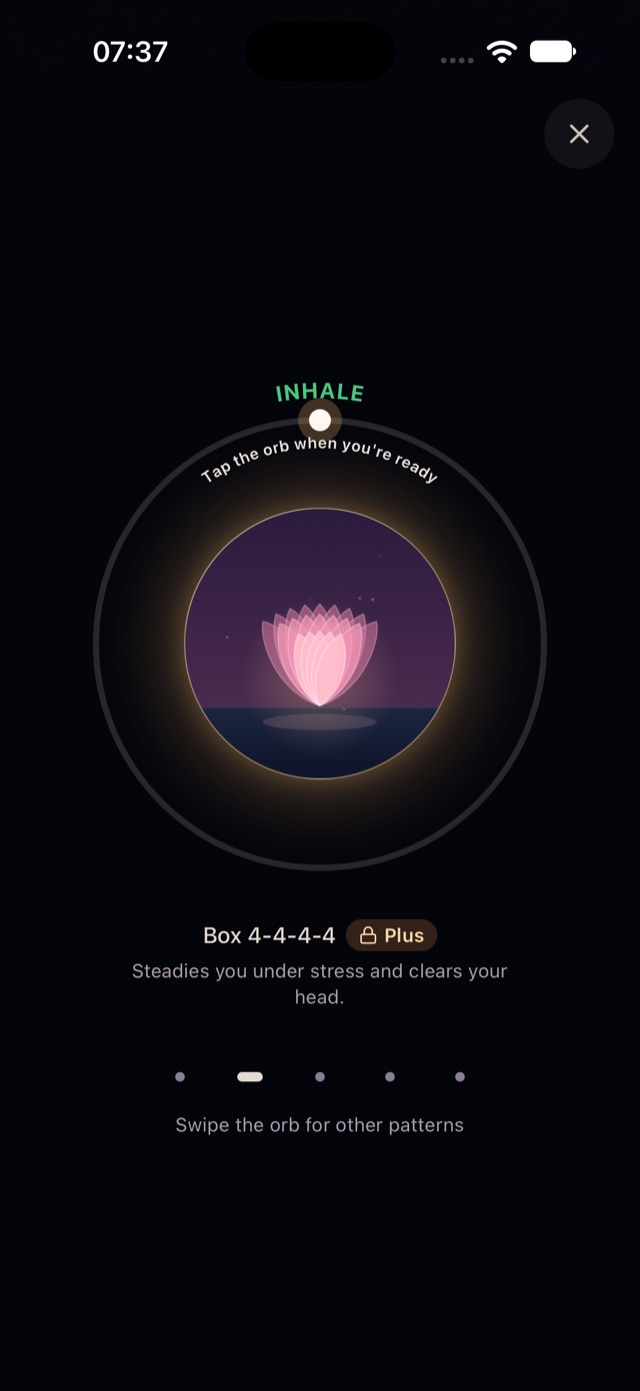
Breathing exercises, sleep sounds and a mood journal, in one quiet app for your phone. No ads inside.
Feeling unsafe? Get help now
Related guides
A slow 10-minute morning routine
A gentle way to start the day without grabbing your phone first: water, light, a few breaths and one intention.
Read the guide →4 min readThe 5-4-3-2-1 grounding exercise, step by step
Use your five senses to come back to the present moment. A simple, quiet exercise for when your mind is racing or spinning.
Read the guide →